How to Evaluate Organic Certifications on Mattresses: A Practical Guide
A concise, non-commercial guide to understanding key organic certifications for mattresses. Learn what GOTS and GOLS certify, how to verify legitimacy, and what questions to ask manufacturers to ensure true organic content.
By focusing on certifications, readers can cut through marketing hype and make informed decisions about sleep surfaces. This guide is crafted in the spirit of clarity, transparency, and practical steps you can implement today.
The domain organicmattress.me sets a clear expectations: this is a resource dedicated to understanding organic materials and the certifications that verify them. In a market crowded with terms like “natural,” “organic,” and “green,” true certification acts as a reliable lighthouse for health-minded shoppers and sustainable sleepers alike. We’ll explore the most widely recognized certifications, how they apply to different components of a mattress, and how to interrogate product claims without stepping into sales territory.
Why Certifications Matter
Certifications exist to provide independent verification of claims about organic content, processing methods, and supply-chain integrity. They help answer essential questions: Is the fabric truly organic from seed to seam? Are the foam and padding free from harmful chemicals? Is the latex certified as organic by a trusted body? For consumers, certifications translate to trust—and that trust is invaluable when sleep health and environmental impact are on the line.
When a mattress carries a certification, it typically signals attention to a chain of custody, from raw materials to finished product. It also implies adherence to standards regarding chemical exposures, worker safety, and environmental stewardship. However, certification scope and rigor can vary. Some certifications cover only the primary materials, while others extend to processing, printing, and packaging. The practical takeaway is to verify what the certification covers and whether it aligns with your priorities: health, eco-footprint, or both.
Key Certifications: GOTS, GOLS, and Beyond
Below is a concise framework to understand the most commonly referenced certifications in organic mattresses. This section is designed to empower you to read labels with confidence and ask targeted questions during research or conversations with manufacturers.
GOTS is widely recognized as the leading standard for organic textiles. It covers a textile’s entire supply chain—from fiber to finished product. A GOTS certification ensures that fibers are organic, chemicals used are permitted by the standard, and production processes meet environmental and social criteria. While GOTS excels for textiles (cotton, wool, fabrics), confirmation is needed whether the certification extends to non-textile components like springs, latex cores, or padding. In mattresses, GOTS is most relevant to fabric covers, padding fabrics, and any textile layers that carry the organic claim.
GOLS certifies that the latex used in a mattress is organic from source to finish, ensuring that the latex is produced without synthetic additives and with environmentally responsible practices. This certification is particularly important for latex mattresses, as latex is a major determinant of feel, durability, and health considerations. GOLS also addresses the processing and manufacturing steps, aiming to reduce environmental impact and ensure fair labor practices.
There are additional standards that may appear in product labeling, such as certifications for flame retardants, barrier materials, and textile safety. While not all are “organic” certifications, they reflect safety and quality commitments. Examples include Made Safe, OEKO-TEX standards for chemical safety, and regional eco-labels. When evaluating a mattress, cross-reference these certifications with GOTS/GOLS for a fuller picture of material integrity and safety.
A Practical Framework for Evaluating Labels
Use this framework as a quick-reference checklist when you encounter a mattress label or a product page. The goal is to identify what is certified, how the certification applies to the product, and whether the certification is current and verifiable.
- Identify the scope — Determine which materials or components are certified (fabric, padding, latex core, foam, coatings, or entire mattress).
- Check the certifying body — Confirm that the certification is issued by a recognized authority (e.g., GOTS, GOLS, or accredited affiliate bodies).
- Verify validity dates — Look for issue and expiration dates, and ensure that the product label matches the current certificate.
- Assess the supply chain — Investigate how far back the certification applies in the supply chain and whether sub-suppliers are included.
- Ask about testing and documentation — Request third-party test reports, certificates, and any recent compliance documentation.
- Consider the coverage of flame retardants — If a mattress uses textile layers with flame retardants, verify whether the materials themselves are certified organic and free from restricted additives.
These steps help you approach a label with methodological discipline rather than assumptions. Even with robust certifications, a product’s overall safety and environmental footprint depend on multiple factors, including how non-certified components are sourced and treated.
What to Ask Manufacturers: A Short Guide
When you engage with manufacturers or retailers, use open-ended questions that elicit concrete documentation and transparency. Here are focused prompts crafted to yield actionable information without venturing into promotional territory.
- Which components of the mattress are covered by GOTS certification (fabric, padding, border, etc.)?
- Is the latex used in the mattress certified by GOLS? If so, please share the certificate number and certifying body.
- Can you provide current certificates and third-party laboratory test reports for the materials used?
- Do you publish a supply-chain map or a sourcing summary for raw materials?
- Are any flame retardant or chemical-free claims backed by independent testing data?
- What is the verification process for ensuring ongoing compliance if production shifts suppliers?
By asking these questions, consumers obtain verifiable evidence rather than marketing statements. Transparent manufacturers will readily share certificates, audit reports, and information about their supply chain. If a company declines or provides vague answers, that is a red flag for further scrutiny.
Glossary: Quick Reference to Key Terms
A concise glossary helps readers navigate the language of certification and materials. Here are essential terms you’re likely to encounter:
- GOTS: Global Organic Textile Standard — certification for organic textiles across the supply chain.
- GOLS: Global Organic Latex Standard — certification for organic latex production and processing.
- Organic cotton: Cotton grown without synthetic pesticides or fertilizers, certified through a recognized standard (often GOTS for textiles).
- Organic wool: Wool produced according to organic farming and processing practices, often certified within GOTS or compatible standards.
- Supply chain integrity: Assurance that every step from raw material to finished product adheres to the stated standards.
- Certification scope: The extent to which a certification covers materials, processing, and finished products.
- Third-party testing: Independent laboratories verifying material content, purity, and safety claims.
Case Studies: How Certifications Made a Difference
Historical and contemporary voices from the sleep and sustainable living communities illuminate how certification decisions influence consumer trust. Three key individuals from distinct time periods offer perspectives that enrich understanding of organic certifications and consumer decision-making.
Dr. Elena Hartmann (Early 20th Century)
A physician and early advocate for material safety in textiles, Hartmann emphasized the relationship between chemical exposure in everyday products and long-term health outcomes. Her work foreshadowed modern certification movements by arguing that patients deserve transparency about what they sleep on. While she could not cite modern standards, her insistence on verifiable facts laid groundwork for later institutions to adopt rigorous testing protocols.
Robert Kim (Mid-20th Century East Asia)
A textile engineer who championed the use of organic farming principles in textile supply chains, Kim’s advocacy helped disseminate the concept of sustainable production. His reporting on farm-to-fabric transparency influenced later certifications, underscoring the importance of traceability for consumer confidence and ecological responsibility in bedding materials.
Dr. Maya Singh (Contemporary synthesist of health and consumer policy)
A public-health researcher who analyzed consumer safety standards, Singh argues that robust certifications empower individuals to make choices aligned with both personal health and planetary well-being. Her work highlights the role of independent testing, open data, and accessible interpretation of complex standards for informed decision-making.
Putting It All Together: Your Roadmap to a Certifiably Organic Mattress
Armed with the framework and examples above, you can craft a practical, non-commercial path to identifying certifiably organic mattresses. Start with the certifications that matter most to you, request documentation, and compare products on a like-for-like basis. Remember to verify the scope of each certification and to seek current, independent test results whenever possible.
For readers prioritizing a blend of health and environmental stewardship, a mattress that combines GOTS-certified fabrics with a GOLS-certified latex core (and transparent supply-chain documentation) represents a thorough approach to organic integrity. If your priorities lean toward textile comfort and safety, GOTS on the cover fabrics, plus supportive, low-emission padding, can be a strong alignment while maintaining accessibility and price considerations.
Product Spotlight: Obasan Organic Wool Moisture Pad Protector
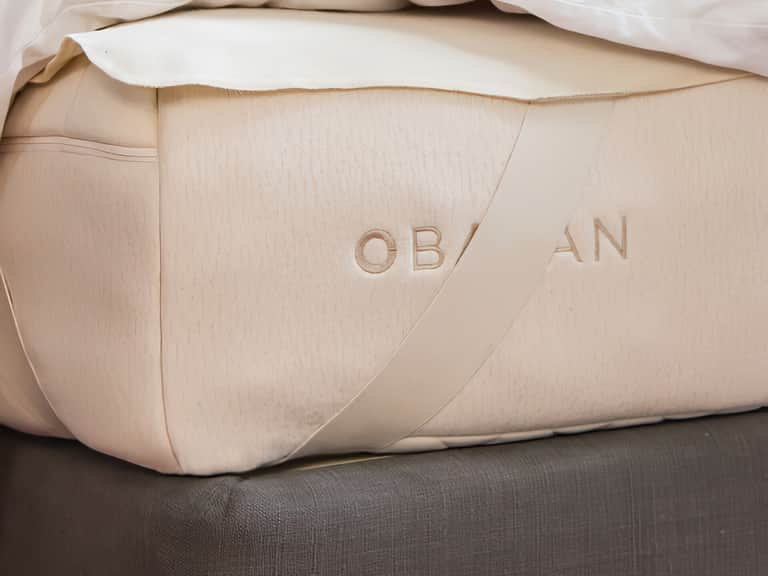
The Obasan Organic Wool Moisture Pad Protector embodies the practical application of wool’s natural properties—moisture regulation, warmth balance, and flame retardancy—without synthetic additives. This protector is designed to shield your mattress from spills, sweat, and daily wear while maintaining a clean, hygienic sleep surface.
Crafted from GOTS-certified organic wool sourced from Argentina, it blends environmental stewardship with functional design. Elastic straps secure the protector to the mattress, ensuring a snug fit that helps preserve mattress integrity over time. The product’s care guidance emphasizes gentle handling to maintain wool’s resilience and effectiveness. For readers evaluating non-chemical, natural protections for sleep surfaces, this pad offers a concrete, certifiable example of organic materials in action.
Price: 209.00 USD

Obasan Organic Wool Moisture Pad Protector — Product image
A Note on Neutral, Non-Commercial Guidance
Direction C for this site centers on diagnostic, how-to, and certification-focused content. It intentionally avoids product endorsements or purchasing guidance, instead offering readers a framework to evaluate claims with rigor. By staying transparent about sources, citing standards bodies, and presenting questions you can take to manufacturers, this resource aims to be a trustworthy companion in the search for genuinely organic sleep surfaces.
In a market where claims can be nuanced or nuanced beyond easy verification, the approach outlined here emphasizes consumer empowerment: insist on documentation, understand the scope of certifications, and prioritize independent testing when possible. The ultimate measure of success is not merely a label, but the integrity behind that label as demonstrated through verifiable documentation and consistent practice.
For Further Reading and Resources
- Global Organic Textile Standard (GOTS) official documentation and certificates
- Global Organic Latex Standard (GOLS) certification details and directory
- Independent third-party testing laboratories and reporting frameworks
- Consumer guides on mattress materials and chemical safety
Conclusion: A Responsible Path to Healthier Sleep
As our understanding of materials, health, and sustainability evolves, certifications will continue to play a central role in guiding consumer choices. A mattress that is genuinely organic, verified by credible standards, can contribute to better sleep quality while aligning with broader environmental values. By approaching labels with a structured mindset, asking precise questions, and demanding documentation, readers can move beyond marketing and toward peace of mind grounded in evidence.
The journey from label to confidence is navigable when you adopt the guidance outlined in this article. The domain organicmattress.me serves as a compass for readers who seek truth, transparency, and a thoughtful approach to choosing sleep surfaces that respect both human health and the planet.